

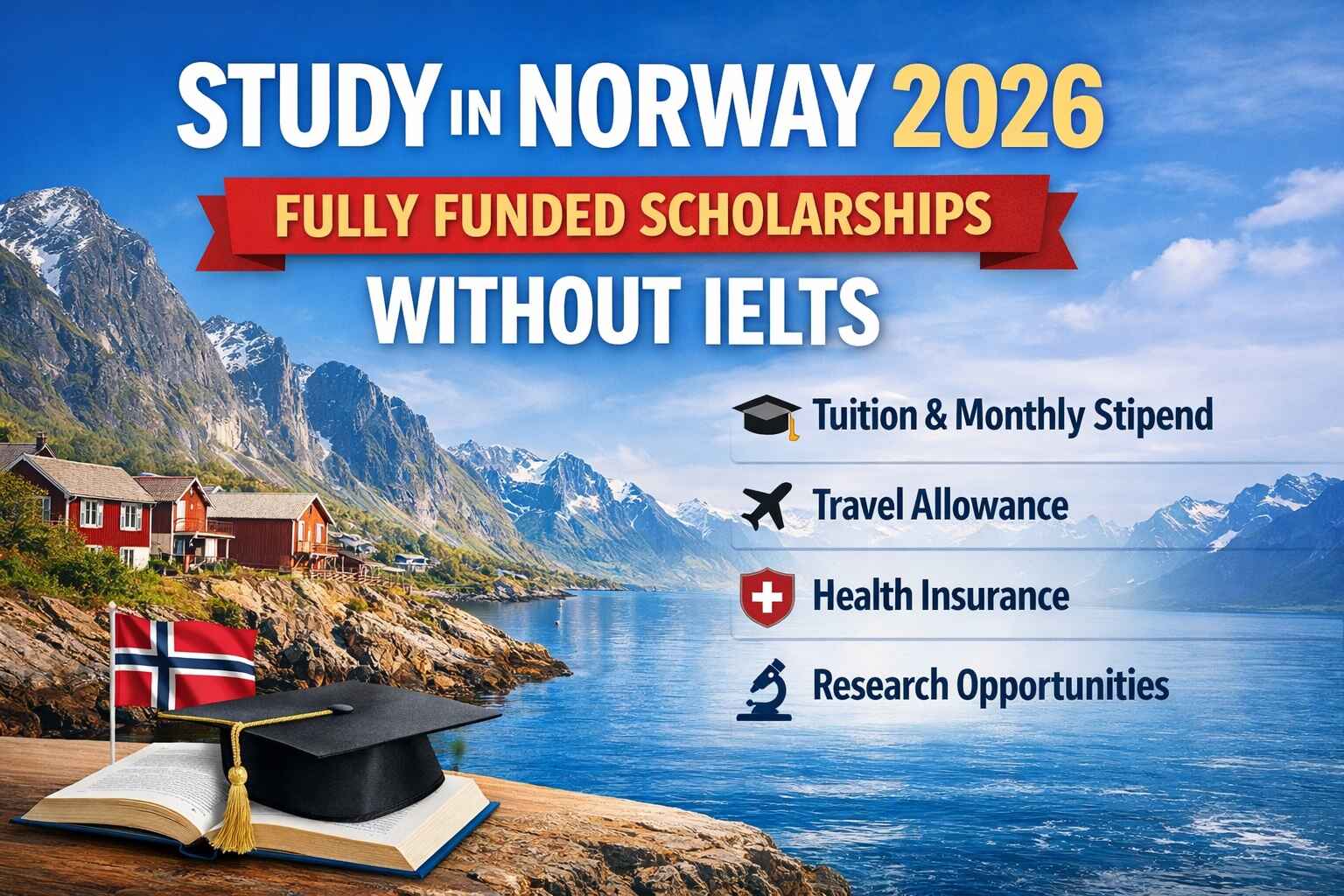
Norway is becoming one of the most attractive destinations for international students who want a high-quality education in Europe. Many universities in Norway now offer fully funded scholarships for the 2026–2027 academic year, and some programs allow students to apply without IELTS.
These scholarships help students pursue Bachelor’s, Master’s, and PhD programs while receiving financial support for tuition, living expenses, and other academic costs.
Norway’s universities are globally recognized for their advanced research facilities, modern campuses, and strong academic standards. In addition, the country provides a safe environment and an excellent quality of life for international students.
Why Study in Norway?
Norway offers several advantages for international students:
Globally respected universities
High quality education and research opportunities
Safe and student-friendly environment
English-taught programs available in many universities
Scholarships and financial aid options
Many universities focus on innovation, sustainability, and technology, making Norway an ideal destination for students interested in modern academic fields.
Fully Funded Scholarships in Norway 2026
Several universities and government programs provide fully funded or partially funded scholarships to international students.
These scholarships may cover:
Full or partial tuition fees
Monthly stipend for living expenses
Travel allowance
Health insurance
Access to research labs and academic facilities
This financial support helps students focus on their studies without worrying about major expenses.
Study in Norway Without IELTS
Some Norwegian universities allow students to apply without submitting IELTS scores. Instead, applicants can prove their English proficiency through other methods.
Accepted alternatives may include:
Medium of Instruction (MOI) certificate from the previous university
Other English language tests such as TOEFL, Duolingo, or Cambridge English
Online interview or language assessment conducted by the university
Students should always check the specific language requirements of the university before applying.
Required Documents
Applicants usually need the following documents when applying for scholarships in Norway:
Academic transcripts and degree certificates
Updated CV or resume
Statement of purpose or motivation letter
Letters of recommendation
Passport copy
Research proposal (mainly for PhD programs)
Submitting a strong application with clear academic goals increases the chances of receiving a scholarship.
Who Can Apply?
International students from different countries can apply for Norwegian scholarships if they meet the academic requirements.
Students with strong academic backgrounds, research interests, and clear career goals often have better chances of selection.
What Do These Scholarships Include?
Many scholarship programs connected with Norwegian universities, government-supported schemes, and international partnerships offer strong financial assistance to students. The exact benefits may vary depending on the course and study level, but most programs are designed to reduce or completely remove the financial burden of studying in Norway.
In many cases, students receive complete tuition fee coverage. Some scholarships also provide free housing or fully funded accommodation support. A monthly allowance is often included to help cover daily living expenses such as food, transportation, and personal needs.
Certain programs may also cover round-trip airfare, visa application charges, and residence permit fees. Health insurance is commonly included to ensure students are protected during their stay. For postgraduate students, additional funding for research activities and academic projects may also be provided.
Overall, these scholarships enable students to concentrate on their education and personal growth without financial stress.
FAQ
Q1. Can I study in Norway without IELTS in 2026?
Yes. Some universities accept alternative proof of English proficiency such as a Medium of Instruction certificate, Duolingo test, or an online interview.
Q2. Are scholarships in Norway fully funded?
Many scholarship programs provide full financial support including tuition fees, monthly stipend, travel allowance, and insurance.
Q3. Which degrees are available for international students?
Students can apply for Bachelor’s, Master’s, and PhD programs in various fields including technology, science, business, and social sciences.
Q4. What documents are required to apply?
Applicants usually need transcripts, CV, motivation letter, recommendation letters, passport copy, and sometimes a research proposal.
Q5. Is Norway good for international students?
Yes. Norway offers high-quality education, safe living conditions, modern universities, and strong research opportunities.
Final Thoughts
Studying in Norway is a great opportunity for students who want world-class education in Europe. With fully funded scholarships available and flexible language requirements in some universities, international students can pursue their academic goals without major financial barriers.
Students interested in these opportunities should start preparing their documents early and regularly check official university websites for updates.
